


| Version : | 1.1.378.410.1 | |
| Developer : | Skystone Games Pte. Ltd. | |
| Updated : | Aug 18, 2025 |
| Version : | 1.3.4 | |
| Developer : | Skystone Games Pte. Ltd. | |
| Updated : | Aug 20, 2025 |
Editor's Review (Referrer)
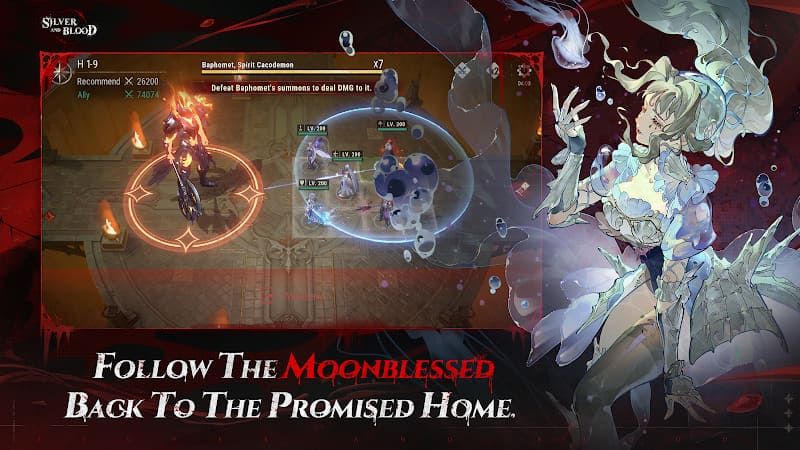

Silver and Blood stands apart among the mobile RPG set due to its intense focus on the Bloodborn’s mythos and the careful worldcrafting within Minexus’s continent during the plague-wracked autumn of 1353. This isn’t vampire fantasy as such; blood is more than a dark imagery here. It’s literally a vessel of memories and power due to an origin story of thirteen alchemists who consumed Abel the Martyr’s blood in order to receive a kind of immortality at the cost of memory transference. This dark concept of “blood as memory” pervades every interaction: key moments in the story have characters exchanging or wrestling with their own pasts, so that every battle is an individual reckoning rather than senseless brawling for treasure or glory.
The game’s narrative concerns Noah, a suspected heretic condemned to the guillotine, whose life is turned upside down by a mysterious Bloodborn girl. Instead of a typical “chosen one” hero’s quest, Noah is pulled into an intrigue-ridden world of Church inquisitors, vampire clans, and unscrupulous scholars, each having their own schemes for the Black Blood plague. These factions are never window dressing: over the course of the campaign, players will be forced to juggle alliances, betrayals, and compromised morality—at times even befriending their enemies like the Church inquisitors, but only so long as your rapport balances upon a razor’s edge between trust and convenience.
Every one of the game’s main regions is drenched in gothic atmosphere, from the cavernous vampire mansions and Blood Beast woods that instill fear to citadels where arcane experiments blur the line between faith and sorcery. There’s a sense in Silver and Blood that the stakes are existential and tragic, supported by cutscenes, lore splashes revealed through exploration, and even “blood memory” events that tie your hero’s progression to climactic revelations about the world’s history. The art style (reminiscent of Korean manhwa) adds to this dark thematic richesse, with a background that’s rightfully unique among mobile RPGs.
Copyright © GameNaomi - All Rights Reserved

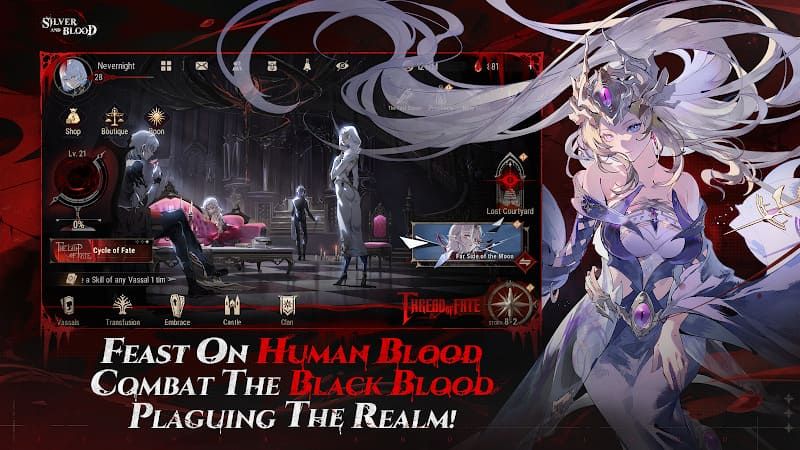

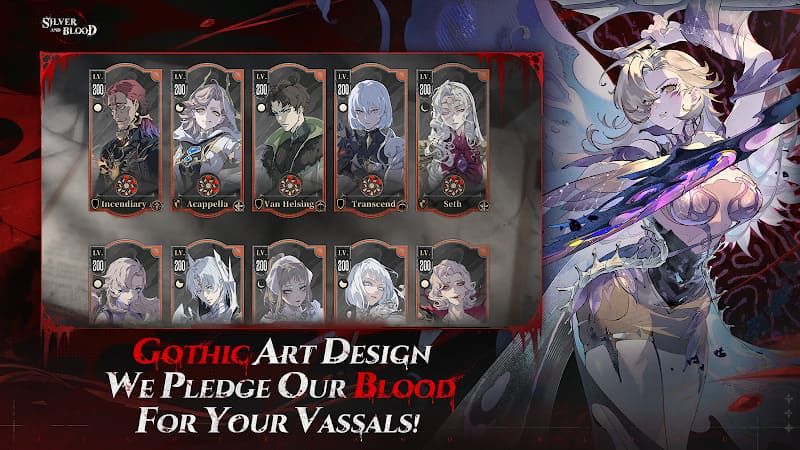
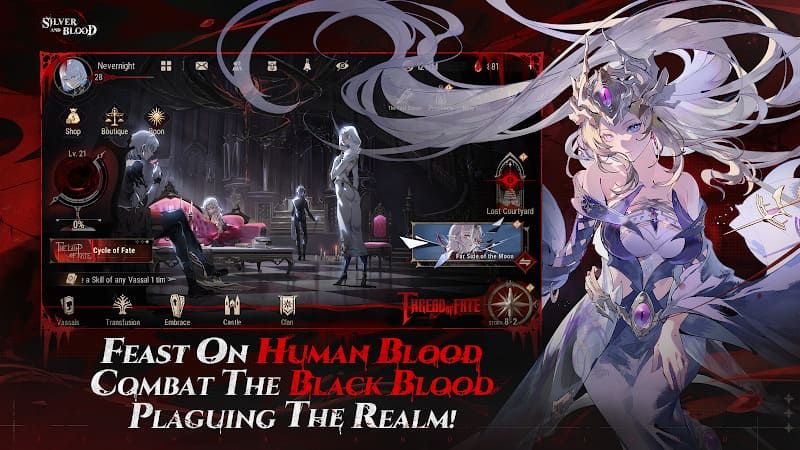
One of the deepest innovations of Silver and Blood is the vassal system, which adds unparalleled complexity and strategic thought to team development and building. “Vassals” are not merely units, but characters with their own individual backstories, unique artifacts, and an interaction of abilities tied directly to the lore. Each vassal possesses a Moon Type—Half Moon, Crescent Moon, or Full Moon—a system that has a direct impact on party synergy and battle flow. Moon Types are not just flavor text; certain ultimate abilities and team-wide buffs are only accessible when players bring compatible vassals together and align their skills with the lunar cycle, mirroring the intertwinement of moon phases with vampiric lore.
Every vassal is defined not just by rarity (R, SR, SSR), but by a list of both active and passive skills, many of which reference personal story events or relationships with other vassals. For example, some ultimates are only usable after another vassal perishes in battle, echoing friendships or enmities forged in the campaign narrative. Faction loyalty is not just for show: party bonuses and conversation choices vary depending on which houses (vampires, Church, rogue Bloodborn, neutral scholars) you’re pledged to, and can even impact the outcome of story chapters or unlock hidden scenes.
Recruitment is naturally tied into progression and the gacha mechanics of the game, but Silver and Blood also features a unique “Blood Transfusion” system that allows you to combine vassals and clone them in order to increase their stat caps and unlock moon phase synergies. There are no generic vassals: For instance, Bella, with her unsettling four mannequin arms, offers shield wall capability, whereas Ressa the nun of the orphanage can mow down waves of enemies, but only if you ‘befriend’ her through specific choices.
Combined, this rich vassal system—where unit synergy, moon phases, personal lore, and power development are all entwined—propels Silver and Blood far beyond the shallow unit collecting mechanics of mobile RPGs.
Copyright © GameNaomi - All Rights Reserved

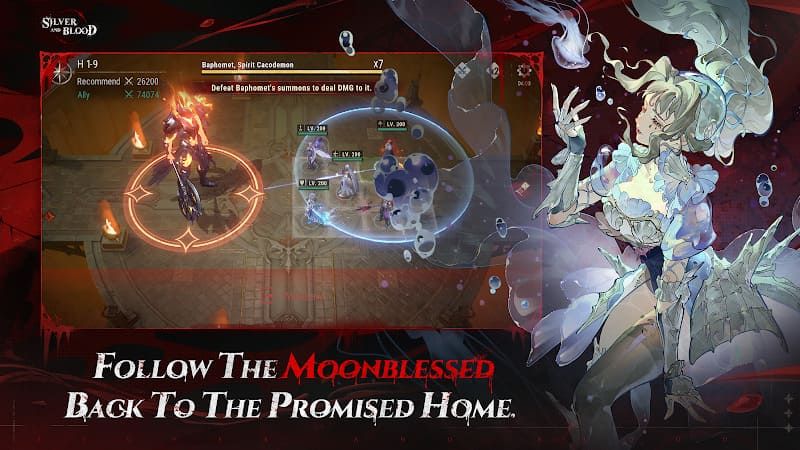
Silver and Blood stands out for its blending of autobattler mechanics with deeply strategic real-time control, creating a combat system that demands foresight as well as quick thinking. Unlike the majority of mobile RPGs where combat is all but passive, Silver and Blood’s combat takes place on a tactical 3x3 battlefield, where the placement of each vassal wins or loses the battle. They must position tanks in front to dissuade enemy advances, assassins behind the enemy lines to take out enemies individually, and range or mages in the rear to maximize their damage. This placement not only determines damage distribution but also skill target priorities and enemy focus.
There exists a unique resource known as Blood Energy that plays a key role in combat. Each vassal generates Blood Energy while they battle—both receiving damage and dishing out damage charge this meter. When this meter is full, players can unleash their powerful ultimate skills, which can turn the fight around. The ultimates have a timing for uses: the correct chaining of them can utilize buffs that are tied to the phases of the Moon (Half Moon, Crescent, Full), a system that boosts the team’s abilities and damage. Using this timing properly most likely decides the victory over difficult enemies and bosses.
The artifact system is one of the game’s best features of tactical richness. Artifacts are special items of equipment that yield additional skills, stat boosts, or passive gains. Artifacts are acquired primarily through particular modes and trials in the game. Apart from standard equipment, some artifacts can be combined with any weapons that share identical names, branching into individual items that possess powerful combined bonuses. In battle, artifacts can be swapped among vassals since they react to shifting enemy strategy in real-time. This dynamic artifact integration encourages constant reassessment of tactics and prevents battle to lead towards repetition or formulaic strategy.
Each of these systems—positioning, Blood Energy management, Moon Phase synergy, and artifact utilization—is combined to create Silver and Blood’s fighting highly engaging and gratifying for players who invest in learning its complex systems. Victory is seldom a matter of raw power but depends on knowing and taking advantage of the interaction of these features in order to outmaneuver the foe.
Copyright © GameNaomi - All Rights Reserved
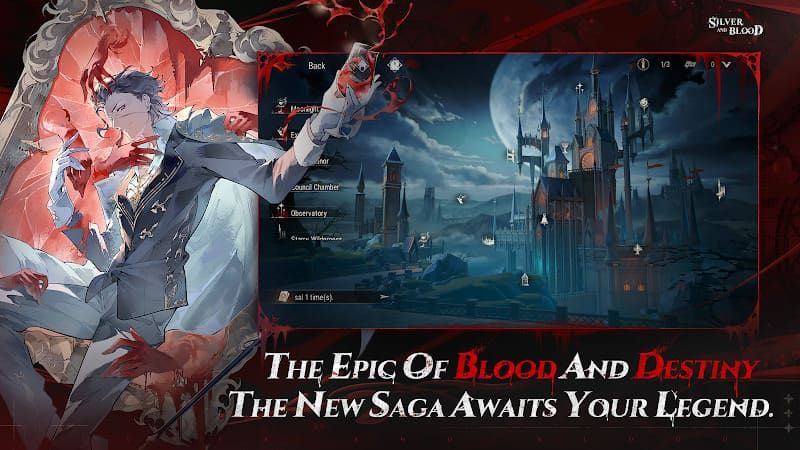

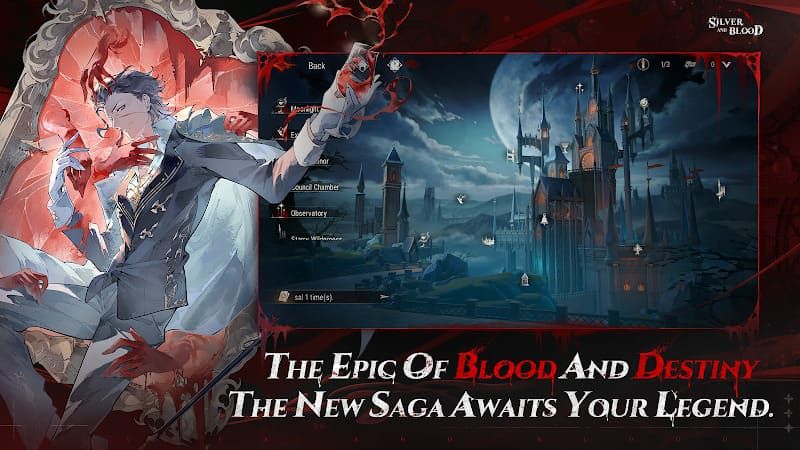
Silver and Blood offers an audiovisual treasure that combines Korean manhwa-style visuals with a gothic fantasy atmosphere of opulence to produce a transporting sensory sensation all too rare in mobile RPGs. The game’s artwork is meticulously done: from the foreboding, black castles to the ominous, twisted forests through which roams the Blood Beasts, each environment exudes a palpable atmosphere of horror and dread. The appearances are of a world constantly on the brink of collapse, with landscapes and structures that tell untold stories of age-old dynasties and continuous wars.
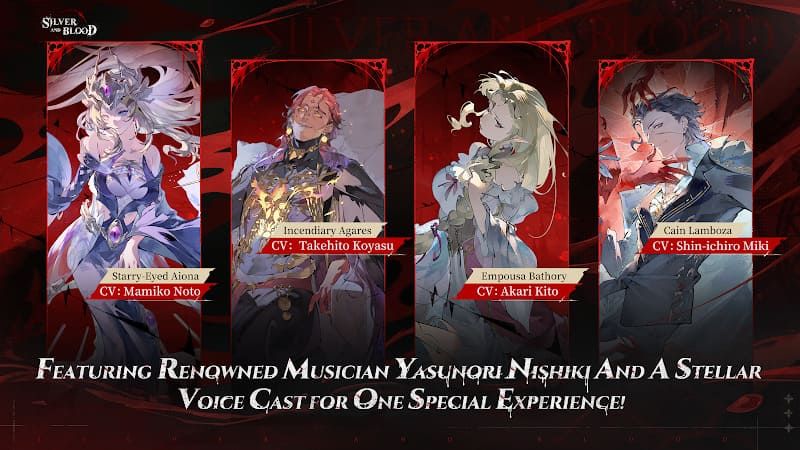
Character design is a one particularly strong aspect. Every vassal has distinct visual and personality that is more or less directly tied to lore and in-game role. Bella’s unsettling four mannequin arms, for example, are not mere window dressing—she’s illustrating the extent of her troubled history and the unorthodox tanking playstyle she offers to the field of battle. Similarly, the orphanage nun Ressa’s innocent appearance contrasts sharply with her devastating area damage skills, visually reinforcing the theme of hidden power beneath fragile exteriors.
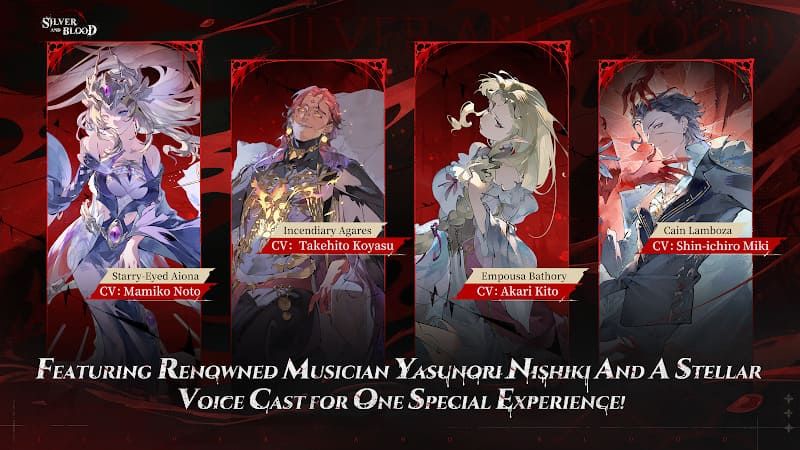
The music balances the tension and emotion of the game with eerie melodies and orchestral scores that amplify key moments in the story. The excellent music is an emotional frame that adds depth to player immersion and underscores the gothic tragedy nature of the narrative. This is complemented by the voice acting, which is first-rate, whose performances add weight and complexity to characters, so cutscenes and event dialogue are delivered like installments from a dark fantasy anime series.
Animative elements also impress, with fluid, anime-style combat ultimates and camera cutscenes breaking the gameplay. Areas of blood-red glows, moonlight silver, and wispy shadows add to the theme of duality of light and darkness in the game. Even the user interface gets the gothic motifs echoing to some degree, brining the game’s aesthetic into all interfaces.
As a whole, the audiovisual design of Silver and Blood is not merely about visuals but about telling an emotional story. It results in a unified world in which art, sound, and narrative merge effortlessly together to transport players into a somber, tragic narrative of blood, power, and destiny unlike any other within the mobile RPG category.
Copyright © GameNaomi - All Rights Reserved
 iOS
iOS
 Android
 Official App Guaranteed:
What do you think?
Similar Games

















Comments 0