


| Version : | 3.04.0101 | |
| Developer : | Sparks Info | |
| Updated : | Aug 5, 2025 |
| Version : | 3.04.01101 | |
| Developer : | Sparks Info | |
| Updated : | Aug 7, 2025 |
Editor's Review (Referrer)
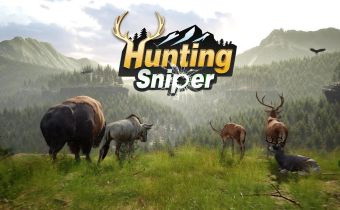

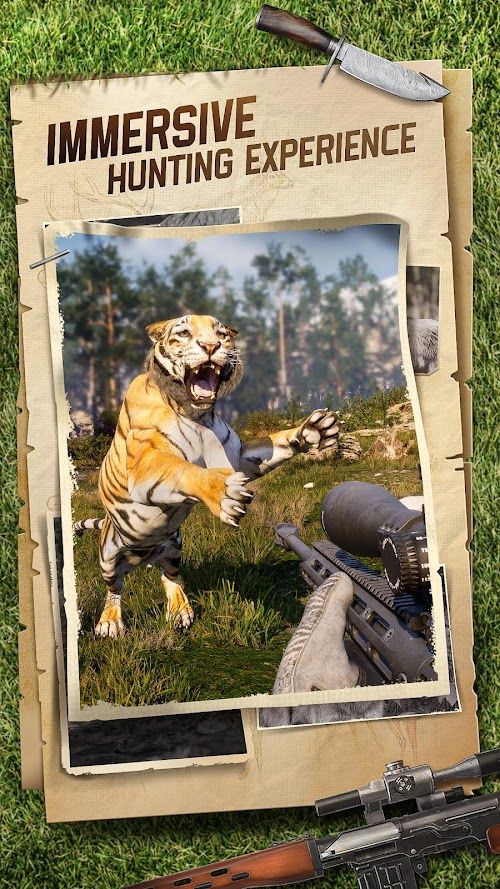
One of the most compelling aspects of Hunting Sniper by Sparks Info is its remarkably realistic wildlife behavior system, which enhances the hunting experience immensely. Unlike many mobile hunting simulators that use static or scripted creature movement, Hunting Sniper offers dynamic animal AI that mimics actual wilderness behavior patterns. Such realism sets it apart from typical shooting games and has great appeal for those who enjoy systematic, nature-oriented gaming.
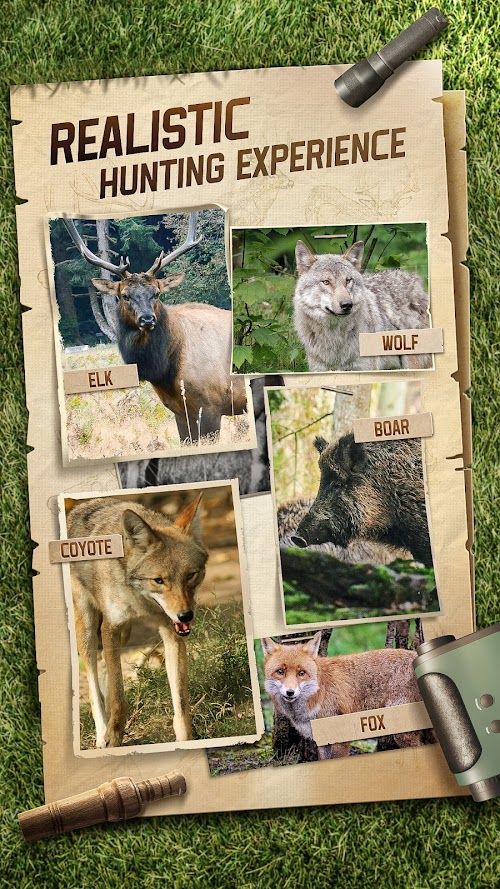
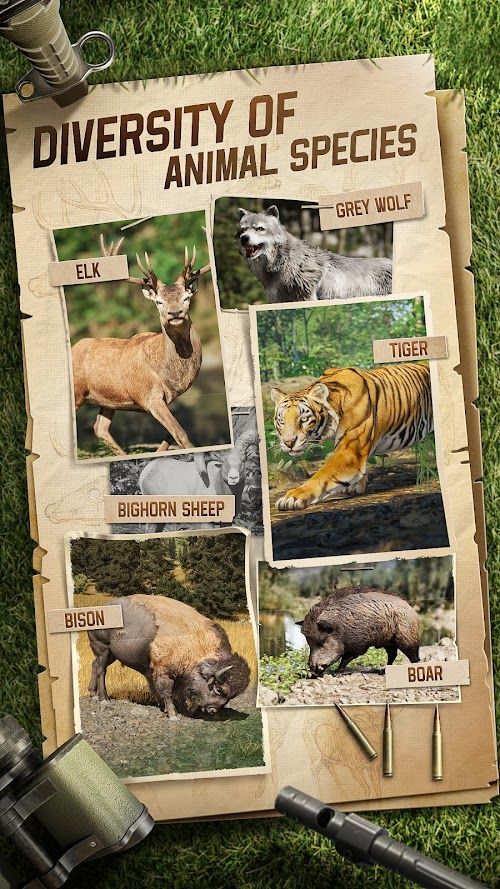
Ever since the initial mission, players have witnessed a range of animal species—deer, bears, wolves, boars, and so forth—each having its own movement behavior. Deer, for instance, will wander idly through open fields, sometimes glancing upwards and going on high alert if the player approaches too quickly or misses them. Alternatively, the predators like wolves or bears can be observed strolling a demarcated area and are never hesitant to flee towards cover if they sense danger or hear the sound of gunfire.
The AI is not necessarily movement—it’s reaction. Animals will react differently to actions and sounds. A close-range encounter will scare a herd of deer out of their minds, running off in different directions and making it more difficult for subsequent shots. There are even missions involving pursuing one animal, and the player must track behavior and observe where the animal is headed. These are nuances that add strategy to the mobile shooter.
Another notable aspect is the varied animations based on the alertness of the creature. The animals can stop to sniff the air, turn their heads to drink some water, or flee in a panic in case they develop an inkling of the player. The activities are not generated at random- the activities are coded in a way that they imitate the actual survival instincts. The more you play, the more patterns you learn, the more cerebral, more thoughtful your playing becomes.
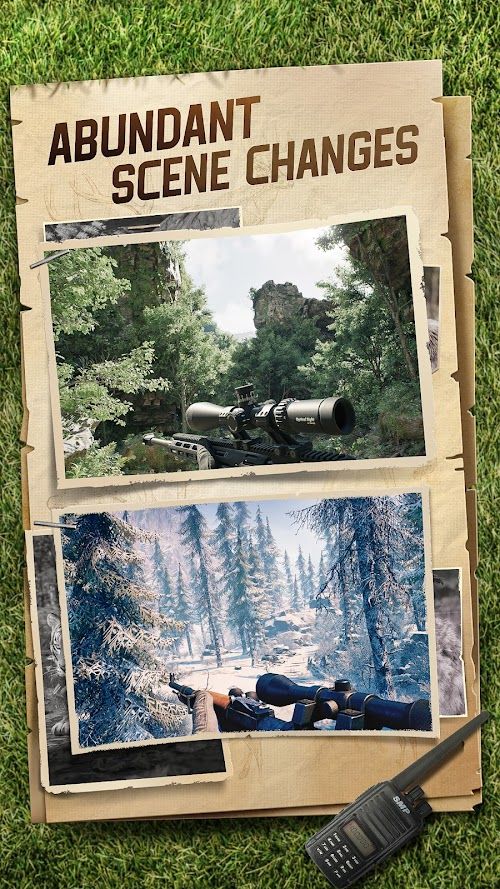
In addition to that, game conditions, i.e., snowy wilds, forest, grasslands, are influencing the behavior of animals. As an example, in snow stages of snow levels, the animals leave traces, which one can follow, but in forest levels, the animals might hide at times or barely show up in the form of a tree that may necessitate fast reflexes and good shooting skills.
Put simply, the animal AI in Hunting Sniper does not represent just a backdrop, it is one of the central mechanics which determines how a player can interact with their surroundings. It pays off to be patient, to observe, and to time things. The game does not depend on showing a lot of action or some kind of an arcade shooting; it provides the player with the need to adjust to the ways of nature and what instincts it has.
Copyright © GameNaomi - All Rights Reserved



One of the largest pillars to Hunting Sniper’s long-term durability is its weapon progression system, i.e., tweaking sniper rifles and subtlety of scope use. Although other hunting games may allow standard gun upgrades, Hunting Sniper’s is a more involved system with a direct influence on gameplay performance in terms of scoped fire, damage scaling, and stability improvements.
At the center of the experience is the sniper rifle, which can be modified in a number of categories: scope, barrel, stock, magazine, and grip. Every part serves a distinct function. A scope upgrade, for instance, doesn’t just increase the zoom levels but also includes steadier aim on higher magnification. This is especially relevant with long-distance shots, where even the slightest screen movement can result in a missed target.
The game features a realistic scope sway system that mimics instability in breathing. As you have the aim down the scope, the scope will slightly sway unless you’re running top-grade stabilizer. The “hold breath” feature also adds some realism because it provides a moment of complete silence to take the perfect shot. This mechanism of breathing is restricted and one is required to deploy it tactically — especially in missions based on time limit or chasing an escaping animal.
Ammunition has upgrades to deal more damage or piercing effect, particularly useful in late game when targets are healthier. Some weapons have special ammunition types supported — e.g., tranquilizer darts for missions where it is preferable to take out the target alive, or incendiary shells to achieve quick takedowns.
New weapons are unlocked by completing missions or by using money earned from hunts. These are cosmetic changes only. Each weapon has special traits like reload time, base damage, recoil speed, and zoom distance. As an example, a rifle might excel at rapid reload but suffer in damage and be ideal for missions with a large number of targets. Another might deliver a one-hit kill from far away but need to be aimed very carefully due to slower reloads.
There is also a visual payoff on each customization. Attachments show up in the 3D representation of the rifle, and upgrades show up in animated cutscenes when they are being used. Scopes click in, barrels get mounted, and new coats of paint get slapped on, making the player feel even more attached to their weapon configuration.
Last but not least, Hunting Sniper treats sniping as art and science. The game is not just handing you a gun — it is challenging you to master it, upgrade it, and use it strategically. The weapon system adds another layer of strategy to the game that turns every hunt from frivolous fun into technical challenge.
Copyright © GameNaomi - All Rights Reserved


While most hunting simulators live and die by their single-player experience, Hunting Sniper breaks new ground with its fully realized multiplayer and tournament hunting features, transforming archaic hunting gameplay into a competitive, international sport. The game’s multiplayer set is not an optional add-on, but a fully realized mode that provides much of the game’s long-term appeal.
Hunters are invited to play live one-on-one hunting duels, and not only is the objective to outscore the opponent in accuracy and efficiency but also to detect and kill some target species under stress. The games are played on custom maps with randomly populated creatures and varying environmental hazards, so multiplayer games never get boring and monotonous. These high-pressure confrontations pay back lightning-fast decision making and pay back creative tactics, like drawing in prey to open shots or employing cover to not get seen.
Beyond one-on-one combat, the game adds regular tournaments that feature more players. These structured events can be thematic, such as using infrequently encountered animals, restricted weapon usage, or hunting in extreme conditions, such as poor visibility or high winds. In terms of single-player progression, this is usually a question of waiting; with tournaments, however, the equation is turned upside down—agility to switch, knowledge of maps, and fast reflexes can push a player to the world leaderboard summit.
Leaderboards display not only live standings by points but also breakdowns by some categories—record-longest shot, kills in a session, and single-match effectiveness—fostering friendly competition. Podium and win finishes bring special cosmetic rewards like animal trophy mounts, special skins for weapons, and permanent in-game titles, all proudly displayed in each hunter’s customizable hunting lodge.
Social elements extend to head-on competition. Clubs may be organized to compete with friends, or players may join seasonal hunting “leagues” in which cooperative goals (such as community kill counts or cumulative trophy totals) benefit the group. Strategic collaboration and information sharing of upper-tier hunting routes or hidden animal spawn locations help groups get high against global opponents. Having a sense of community, competition, and status adds an entirely new dimension to the previous isolation of hunting.
For others seeking the thrill of outsmarting human opposition and winning praise in a global environment, Hunting Sniper’s multiplayer and tournament modes present an unrelenting, rewarding hunt not available in most of its counterparts.
Copyright © GameNaomi - All Rights Reserved


Arguably the most subtly groundbreaking aspect of Hunting Sniper, frequently undervalued until tried for yourself, is its dedication to intuitive control and seamless progression, placing the difficult art of hunting firmly within the grasp of every player.
The control system strikes a tricky balance between realism and accessibility. Whether with phone or tablet play, smooth swipes target, and the game only allows gentle aim correction on moving targets, keeping new players protected while not taking away from seasoned ones. Zooming in with a scope, adjusting for breathing and heartbeat with visual cues on the HUD, and firing under ideal conditions are all simulated after actual sniper experience. Bullet trajectory visualization is only displayed with highest-level scopes, maintaining initial play simple but rewarding knowledgeable players of advanced features.
The reload and recoil animations are quick and fluid, not frustrating, and let each shot “feel” earned. The interface is minimal; the important data such as bullet remaining, type of animal, range, and even wind speed appear contextually, instead of cluttering the screen. Players can then focus on their target and the environment rather than fight with onscreen menus.
Beyond gameplay, Hunting Sniper’s progression system is also top-notch. Missions are well compartmentalized, rewarding not only good shooting but also effective tracking, animal identification, and ethical hunting decisions (e.g., not hunting protected species or quick kills). Side goals—such as headshot-only hunts or “no alert” completions—are done to earn additional contracts, season passes, and bonus content, providing an ample amount of motivation to replay older maps with new tactics.
The daily reward and accomplishment system is complete, with weapon upgrade tokens, limited ammo, and one-off visual items. More significantly, the “hunting pass” system introduces theme-based questlines that guide players through new content, with each goal accomplished adding trophies to a constant lodge. Vets experience new events every week, such as fog hunts or “night vision” challenges, which keep play new. Even after the mission, results breakdown is deployed over a slow-motion replay of salient shots, increasing satisfaction and enforcing learned skill.
All of these systems, added to supportive onboarding lessons and responsive customer care, combine to ensure that Hunting Sniper is not merely deep but also welcoming. For those consumers who enjoy smooth gameplay flow, routine challenge progression, and rewarding feedback loop, the accessible controls and solid progression mechanisms make this game a winner.
Copyright © GameNaomi - All Rights Reserved
 iOS
iOS
 Android
 Official App Guaranteed:

What do you think?
Similar Games






















Comments 0